UX/UI Design
HLTV Redesign Concept
HLTV Redesign Concept
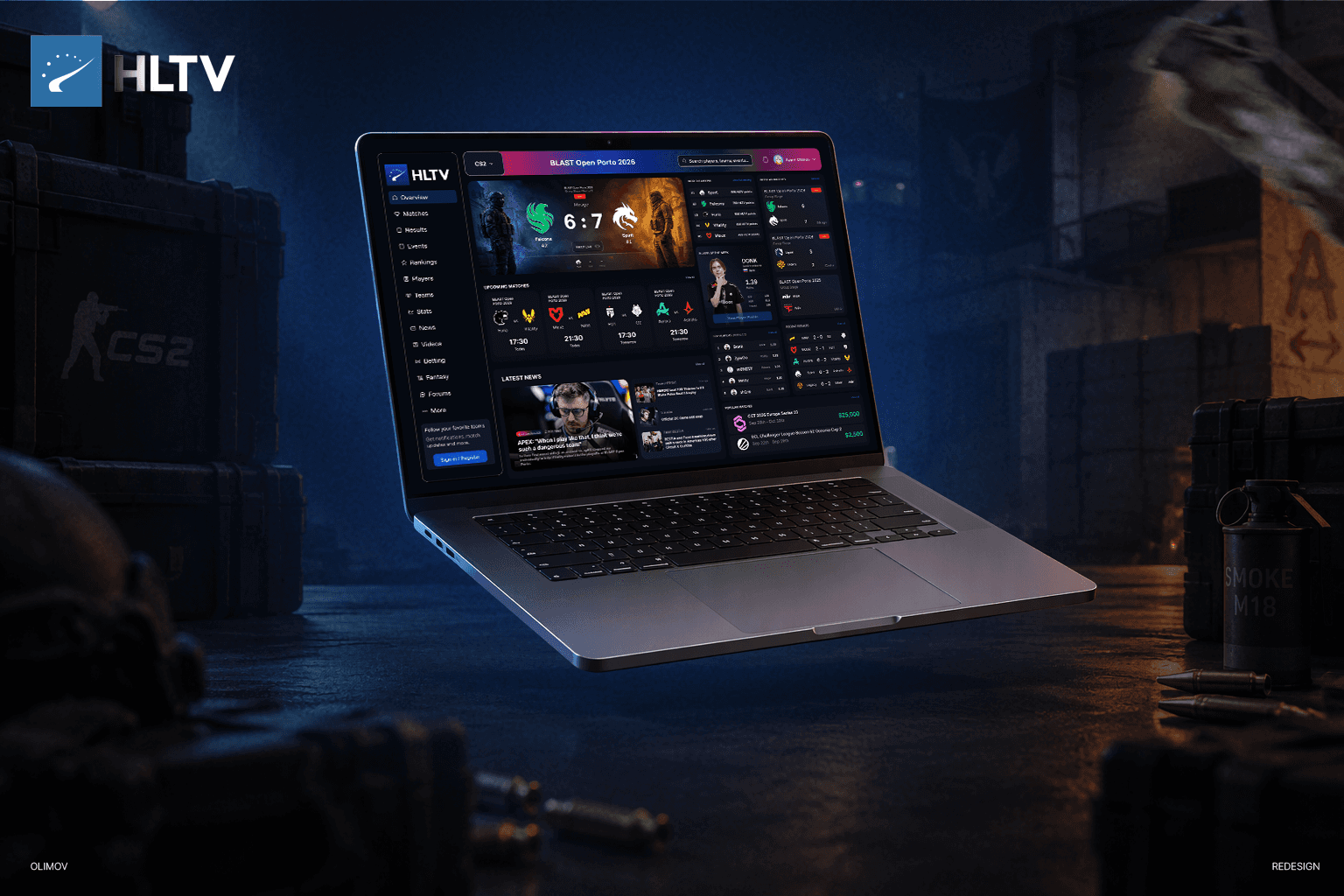
HLTV is one of the most recognized platforms in the Counter-Strike esports ecosystem, providing match coverage, rankings, statistics, and news for millions of fans.
This redesign concept explores how the platform could evolve with a more modern and structured user experience. The project focused on improving information hierarchy, navigation, and content discoverability while preserving the data-rich experience HLTV is known for.
Key improvements include a dedicated sidebar navigation, enhanced live match visibility, modular content organization, and a cleaner visual system designed to make information easier to scan and consume.
The goal was not to reinvent HLTV, but to create a more intuitive and engaging experience for both casual visitors and dedicated esports fans.

Overview
HLTV contains a huge amount of valuable esports information. However, the growing volume of content makes it increasingly difficult for users to quickly identify the most relevant information.
This concept redesign explores how modern UX principles can improve discoverability, readability, and overall user experience without sacrificing depth.

Key Improvements
Dedicated Sidebar Navigation
Introduced a persistent navigation system that provides quick access to Matches, Rankings, Teams, News, and other core sections while reducing visual clutter.
Smarter Information Hierarchy
Reorganized content to prioritize live matches, upcoming events, and key statistics, making the homepage easier to scan and navigate.
Modular Content System
Structured content into dedicated modules such as Rankings, Upcoming Matches, Recent Results, and News to improve discoverability and readability.
Enhanced Live Match Experience
Created a larger and more engaging hero area to improve visibility of ongoing matches and important tournament information.

Outcome
The redesign creates a cleaner and more focused experience while maintaining the depth of information that makes HLTV valuable to the esports community.
By improving hierarchy, navigation, and content organization, the concept demonstrates how complex information can be presented in a more intuitive and engaging way.